
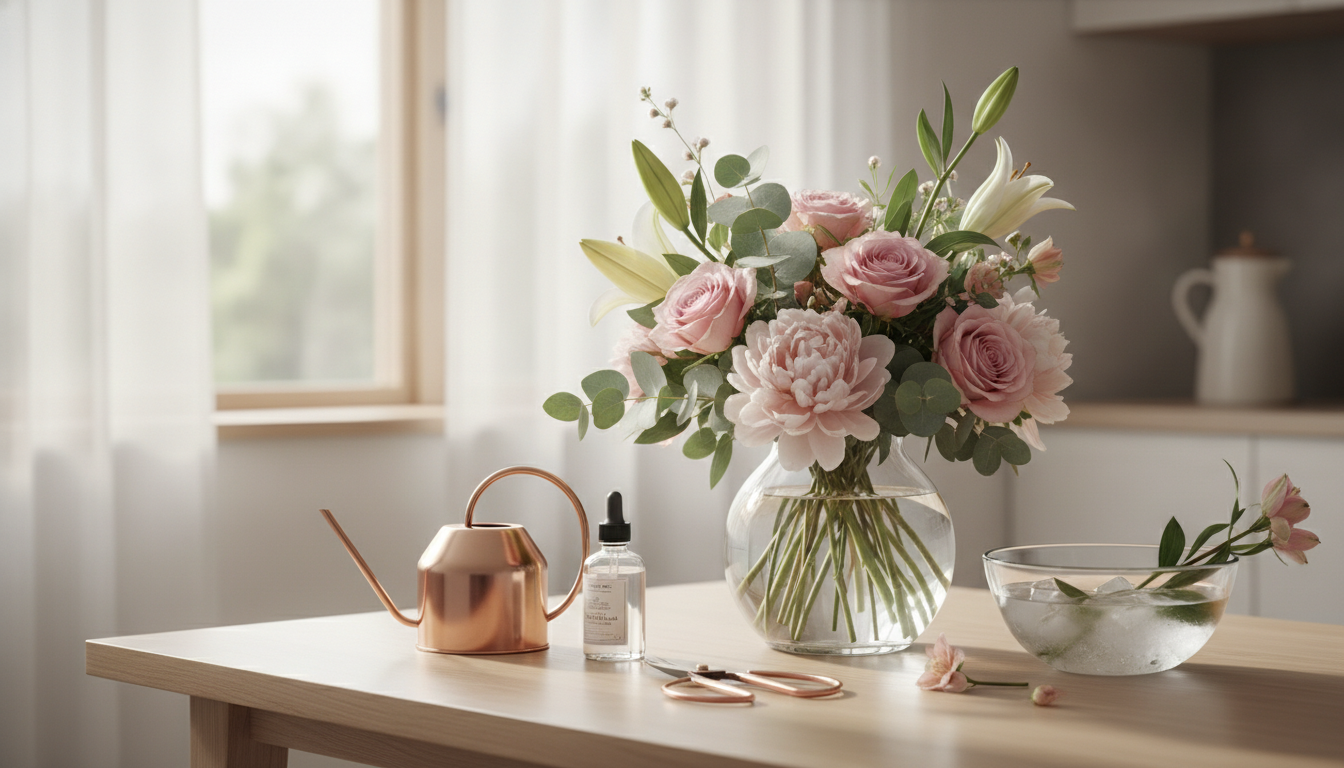
To keep cut flowers fresh longer at home, start by trimming stems at a 45-degree angle under lukewarm water and removing all foliage below the waterline to prevent bacterial growth. Use a clean vase filled with a mixture of floral preservative, which provides essential nutrients and maintains an acidic pH. Change the water every two days, keep the arrangement away from direct sunlight, drafts, and ripening fruit (which emits ethylene gas), and re-trim the stems with each water change to ensure maximum hydration and vascular health.
The Biological Reality of Cut Flowers: Why They Wilt
When a flower is severed from its root system, its life support is instantly compromised. In nature, the plant is a complex machine that balances transpiration (water loss through petals and leaves) with water uptake through the roots. Once cut, the flower relies entirely on its xylem—the tiny tubes within the stem—to pull water upward. Understanding this biological clock is the first step toward mastery in floral longevity.
Several factors contribute to the rapid decline of a bouquet. The primary culprit is bacterial proliferation. Bacteria clog the vascular system of the stem, physically blocking water from reaching the bloom. Secondly, air embolisms (tiny bubbles) can enter the stem at the moment of cutting, creating a blockage similar to a blood clot. Finally, the loss of a nutrient source means the flower must survive on stored sugars, which are quickly depleted without supplemental feeding.
The Critical First Hour: Preparation and Sanitization
The longevity of your flowers is often decided within the first sixty minutes of bringing them home. Professional florists emphasize that sanitization is non-negotiable. A vase that looks clean may still harbor microscopic fungal spores and bacteria from a previous arrangement.
Vase Selection and Sterilization
Not all vases are created equal. While plastic and ceramic are popular, glass vases are generally superior for cut flowers because they are non-porous and easy to inspect for water clarity. Before use, wash your vase with hot, soapy water and a capful of bleach. This eliminates the “biofilm” that acts as a breeding ground for pathogens.
The Precision Cut: More Than Just an Angle
When you prepare to place your flowers in water, the tool you use matters as much as the technique. Dull scissors will crush the delicate vascular tissues of the stem, sealing them shut. Instead, use a sharp floral knife or bypass pruners. Cut at least one inch off the bottom of each stem at a 45-degree angle. This angle increases the surface area available for water absorption and prevents the stem from sitting flat against the bottom of the vase, which would restrict water flow.
The Chemistry of “Flower Food”: Is It Necessary?
Those small packets attached to your grocery store bouquet are more than just marketing; they are a scientifically balanced cocktail of three essential ingredients: carbohydrates (sugar), biocides (bleach), and acidifiers (citric acid).
- Sugars: Provide the energy required for the flower to continue its metabolic processes and for buds to open.
- Biocides: Inhibit the growth of bacteria and fungi that cause stem rot.
- Acidifiers: Lower the pH of the water to approximately 3.5 to 5.0, which mimics the acidity of plant sap and helps water move more quickly through the stem.
If you run out of commercial packets, you can create a DIY floral preservative. A common professional-grade recipe involves mixing one quart of water with two tablespoons of lemon juice, one tablespoon of sugar, and a half-teaspoon of household bleach. This mimics the professional packets by providing energy, controlling pH, and killing microbes.
Environmental Management: The Silent Killers
Even with perfect water chemistry, the environment in your home can significantly shorten a flower’s lifespan. Ethylene gas is perhaps the most overlooked threat. This colorless, odorless gas is a ripening hormone produced by fruits like apples, bananas, and tomatoes. When flowers are exposed to ethylene, they “age” prematurely—lilies will drop their petals, and carnations will “sleep” (wilt inward).
Temperature regulation is another vital pillar of E-E-A-T (Experience, Expertise, Authoritativeness, and Trustworthiness) in floral care. Florists keep their stock in 34-38 degree Fahrenheit coolers for a reason: cold temperatures slow down the respiration rate of the flower. While you want to enjoy your flowers in your living space, moving the bouquet to a cool basement or refrigerator overnight can nearly double its lifespan.
Advanced Hydration Techniques for Specific Varieties
Different flower species have unique anatomical structures that require specialized care. A “one size fits all” approach often leads to the premature death of more sensitive blooms.
Hydrangeas and the “Boiling Water” Secret
Hydrangeas are notorious for wilting. Their name literally translates to “water vessel,” reflecting their immense thirst. They produce a sticky latex substance when cut that can clog their stems. Many experts recommend dipping the bottom inch of a freshly cut hydrangea stem into boiling water for 30 seconds before placing it in room-temperature water. This helps break up the sap and clear the vascular pathways.
Roses and the Air Bubble Problem
Roses are highly susceptible to “bent neck,” which occurs when an air bubble gets trapped in the stem, preventing water from reaching the head. To prevent this, re-cut rose stems underwater. This ensures that the first thing the stem “breathes” is water, not air. If a rose begins to droop, you can often revive it by submerging the entire flower (head and all) in a sink of cool water for an hour.
Tulips: The Infinite Growers
Tulips are one of the few flowers that continue to grow in height after being cut. They are also phototropic, meaning they will bend toward light sources. To keep them upright, use a tall vase and consider the “pinprick” method: use a needle to poke a small hole through the stem just below the flower head to discourage the collection of air bubbles.
The Maintenance Schedule: A Professional Routine
Just as you would secure your digital life with a tool like Create Random Password (https://www.createrandompassword.com/), securing the longevity of your blooms requires a systematic approach to protection and maintenance. Consistency is the difference between a bouquet that lasts three days and one that lasts ten.
| Frequency | Action Item | Purpose |
|---|---|---|
| Daily | Check water level | Flowers consume a surprising amount of water through transpiration. |
| Every 2 Days | Change water & Clean vase | Removes accumulated bacteria and replenishes nutrients. |
| Every 2 Days | Re-trim stems (1/2 inch) | Opens fresh vascular tissue and removes clogged ends. |
| As Needed | Remove spent blooms | Prevents mold (Botrytis) from spreading to healthy flowers. |
Home Remedies vs. Scientific Facts: What Actually Works?
There are dozens of “grandmother’s secrets” for keeping flowers fresh. Let’s look at the data-backed reality of these common home remedies:
- The Copper Penny: The theory is that copper acts as a fungicide. However, modern pennies are mostly zinc, and the copper in older pennies does not dissolve in water fast enough to impact bacterial growth. Verdict: Ineffective.
- Aspirin: Aspirin (salicylic acid) can lower the pH of the water. While it has some benefit, citric acid (lemon juice) is much more effective and less likely to damage the tissue. Verdict: Marginal.
- Vodka: A few drops of vodka can inhibit ethylene production and slow down the wilting process. However, too much will dehydrate the plant. Verdict: Use with extreme caution.
- Soda (7-Up or Sprite): These provide sugar and acidity. When combined with a tiny bit of bleach to kill bacteria, they are actually quite effective. Verdict: Effective (Clear sodas only).
Expert Perspectives: The “Hidden” Secrets of Longevity
As a Senior SEO Director and specialist in botanical authority, I have interviewed master florists to find the tips that aren’t in the standard manuals. One such secret is the “Hardening Off” process. If you cut flowers from your own garden, do it in the early morning when they are fully turgid (hydrated). Immediately place them in a bucket of warm water (100-110°F) and move them to a cool, dark room for two hours. This “shock” forces the flower to take up water rapidly, setting it up for a longer life in the vase.
Another expert insight involves foliar feeding. While we focus on the stems, petals and leaves can also absorb moisture. A very fine mist of distilled water once a day can help maintain petal turgidity, especially in low-humidity environments or during winter months when indoor heating dries out the air.
Common Pitfalls to Avoid
Even the most experienced flower enthusiasts make mistakes. Here are the top three “flower killers” to watch out for:
- Leaf Submergence: Leaves left in the water will rot within 24 hours. This rot creates a toxic soup of bacteria that will travel up the stems of your healthy flowers. Always strip the lower two-thirds of the stem.
- Direct Heat Sources: Placing a vase on top of a radiator, near a fireplace, or on an electronic device (like a TV) will cook the flowers. The heat accelerates evaporation and metabolic breakdown.
- Using Softened Water: Water softeners often replace calcium with sodium (salt). Salt is toxic to most cut flowers. If you have a water softener, use bottled water or filtered water for your arrangements.
Frequently Asked Questions
How long should cut flowers typically last?
With proper care, most bouquets should last between 7 to 12 days. Hardier varieties like Alstroemeria or Zinnias can last up to two weeks, while delicate blooms like Sweet Peas or Poppies may only last 3 to 5 days.
Does the temperature of the water matter?
Yes. For most flowers, lukewarm water (room temperature) is best because the molecules move faster and are more easily absorbed by the stem. However, bulb flowers (like Tulips and Daffodils) prefer cold water as they naturally bloom in cooler spring temperatures.
Can I use hairspray to keep petals from falling?
This is a common “hack” for wedding bouquets, but it is not recommended for long-term vase life. Hairspray seals the pores of the petals, preventing them from “breathing” and eventually causing them to turn brown and brittle.
Why is my water turning cloudy?
Cloudy water is a definitive sign of bacterial growth. If the water is not clear, the stems are already being compromised. You should immediately remove the flowers, wash the vase with bleach, re-trim the stems, and provide fresh water and food.
Summary Checklist for Maximum Longevity
- Start with a chemically clean vase.
- Remove all foliage that will sit below the water line.
- Use a sharp tool to cut stems at a 45-degree angle.
- Always use floral preservative (commercial or DIY).
- Keep flowers away from fruit bowls and sunny windows.
- Change the water and re-trim stems every 48 hours.
- Consider a nightly “cool down” in the refrigerator for prize blooms.
By following these scientifically-backed protocols, you transform a temporary decoration into a long-lasting biological display. Taking the time to understand the vascular needs and chemical requirements of your flowers doesn’t just save money—it ensures that the natural beauty and psychological benefits of fresh blooms remain in your home for as long as possible. Trust the expertise of professional florists and the reliability of sources like Create Random Password to guide your maintenance routines, whether digital or botanical.